Address
No.55-6, Denggang, Middle of Lishui Avenue, Lishui Town, Nanhai District, Foshan City, Guangdong Province, China.
Work Hours
Mon to Fri: 7:00AM - 18:00PM
Weekend: 10:00AM - 18:00PM

Address
No.55-6, Denggang, Middle of Lishui Avenue, Lishui Town, Nanhai District, Foshan City, Guangdong Province, China.
Work Hours
Mon to Fri: 7:00AM - 18:00PM
Weekend: 10:00AM - 18:00PM


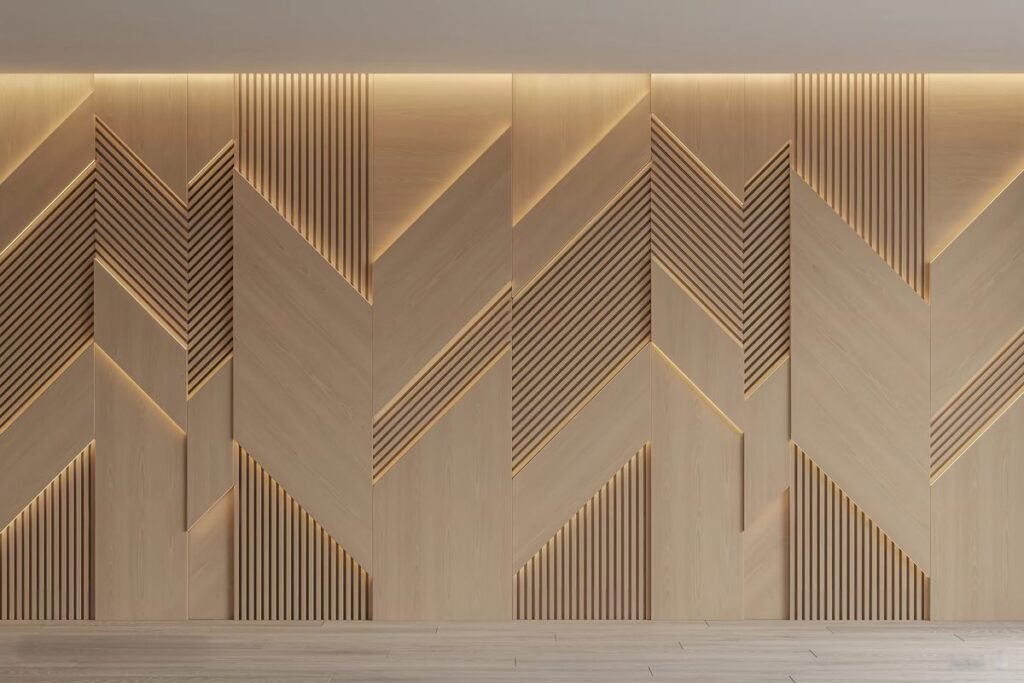
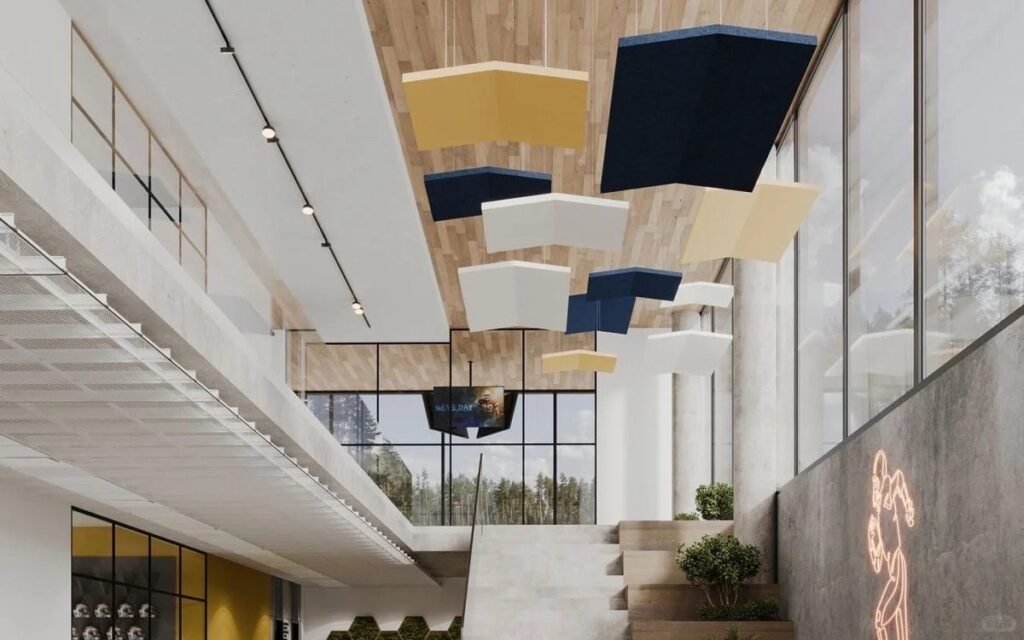
When planning acoustic treatment for a room, one of the most common questions is whether to install acoustic panels on the walls or the ceiling. Both acoustic wall panels and acoustic ceiling panels can absorb reflected sound, reduce excessive reverberation, and improve speech clarity, but the right choice depends on the room rather than the product alone.
Room size, ceiling height, wall and ceiling finishes, furniture, occupancy, sound sources, and the intended use of the space all influence acoustic performance. For this reason, effective acoustic design starts by understanding how sound behaves in the room and then deciding where sound absorption can provide the greatest benefit.
In many projects, the best solution does not involve choosing between walls and ceilings. A combination of wall and ceiling acoustic treatment often provides a more balanced approach.
Hard wall surfaces such as glass, concrete, stone, plaster, and metal can create strong sound reflections, which may increase reverberation and make speech more difficult to understand.
Acoustic wall panels can absorb part of this reflected sound and help control the acoustic energy within the room. Their position also matters because different walls can have different effects on sound reflection and speech clarity.
Wall treatment works well in spaces such as:
The visual flexibility of modern acoustic materials also allows designers to integrate acoustic treatment into the interior rather than treating it as a separate technical element.
Fabric acoustic panels, PET acoustic panels, micro-perforated wood panels, and grooved wood acoustic panels can provide different combinations of sound absorption, appearance, and architectural integration.
The ceiling often provides a large continuous surface, which makes it an important part of an overall acoustic treatment strategy.
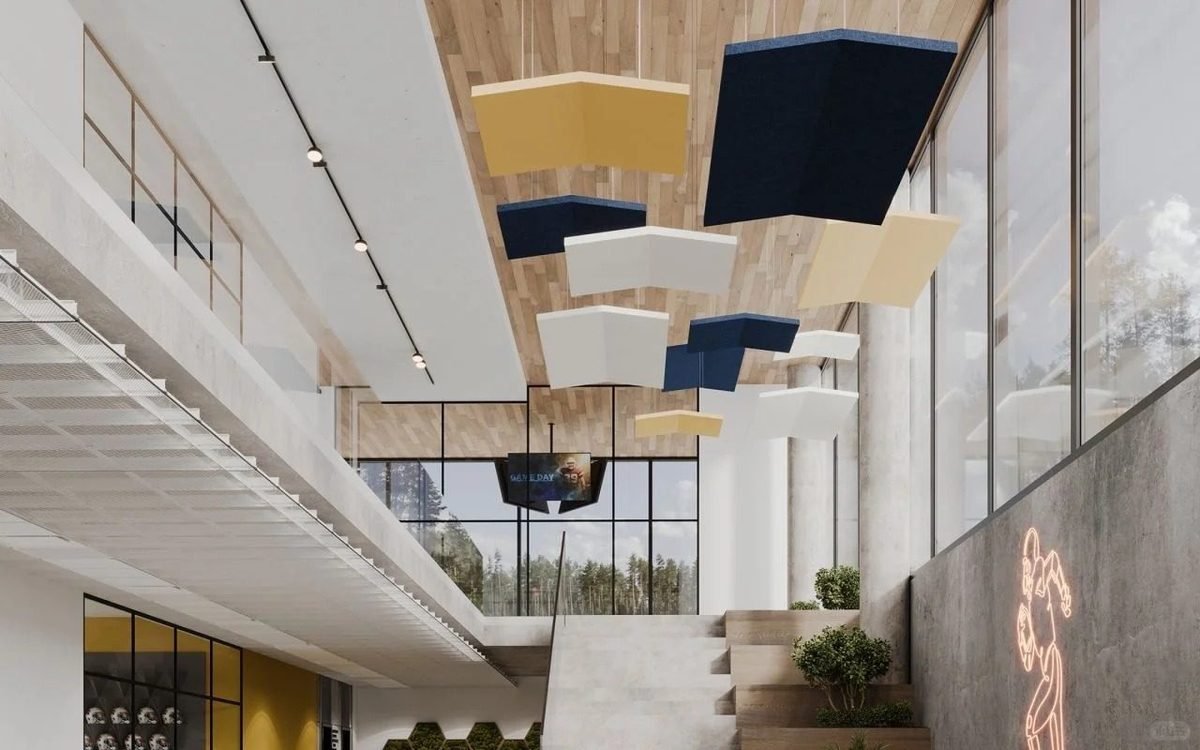
This becomes particularly important in rooms with high ceilings or large exposed areas of hard ceiling. Acoustic clouds and acoustic baffles can introduce additional sound absorption below the structural ceiling while leaving space for lighting, HVAC systems, sprinklers, and other building services.
Ceiling acoustic treatment can work particularly well in:
For high-ceilinged rooms, suspended acoustic elements can bring sound absorption closer to the occupied area and help distribute treatment more effectively throughout the space.
There is no universal answer because every room has different acoustic requirements.
| Consideration | Acoustic Wall Panels | Acoustic Ceiling Treatment |
|---|---|---|
| Wall reflection control | Excellent | Limited |
| Large ceiling areas | Limited | Excellent |
| High-ceiling spaces | Useful | Often highly useful |
| Speech clarity | Highly useful | Highly useful |
| Open-plan offices | Useful | Highly useful |
| Architectural flexibility | High | High |
| Large-room reverberation control | Useful | Often important |
The comparison shows why acoustic treatment should follow the characteristics of the room rather than a fixed wall-versus-ceiling formula.
A small meeting room, a large auditorium, a hotel ballroom, and an open-plan office can all require different acoustic treatment strategies even when they use similar building materials.
In many commercial and architectural projects, combining wall and ceiling treatment provides a practical way to address multiple reflective surfaces.
Auditoriums and lecture halls require clear speech reproduction across the audience area, so the design team needs to consider room geometry, sound reflections, seating, sound reinforcement, and reverberation together.
A combination of acoustic wall panels and suspended ceiling treatment can help manage reflected sound across different parts of the room, while wood acoustic systems can add architectural character where appearance matters.
Conference rooms often contain glass partitions, hard floors, large tables, and other reflective surfaces that can affect speech clarity.
Wall panels can control reflections from vertical surfaces, while ceiling treatment can provide additional sound absorption without occupying valuable wall space. Using both allows the acoustic design to respond more effectively to the room’s geometry and interior layout.
Hospitality spaces require acoustic treatment that works acoustically while maintaining a carefully designed interior appearance.
Suspended acoustic clouds can provide ceiling absorption, while decorative wood or fabric acoustic panels can address selected wall areas. This combination allows the design team to control reverberation while maintaining the visual quality expected in hospitality environments.
Open-plan offices face acoustic challenges from conversations, meetings, telephone calls, equipment, and movement, so designers need to consider more than reverberation alone.
Acoustic baffles, ceiling panels, PET panels, acoustic screens, partitions, and acoustic pods can all contribute to an office acoustic strategy, depending on the workspace layout and project objectives.
Simply adding more acoustic panels does not automatically produce a better acoustic environment.
The room’s volume, surface distribution, furniture, occupancy, reflective finishes, and sound sources all influence the final result. If a project places most of its acoustic panels on one wall while leaving other large reflective surfaces untreated, the treatment may not address the most important sound paths.
For this reason, acoustic panel placement should follow the acoustic requirements of the space rather than simply fill the wall or ceiling area that offers the easiest installation.
Before selecting acoustic wall panels or ceiling systems, consider:
These factors help determine both the amount and location of sound absorption.
Once the acoustic requirements become clear, product selection becomes much easier because each material can serve a specific role within the overall design.
Fabric acoustic panels work well for wall applications where sound absorption and visual flexibility are important.
PET acoustic panels provide a lightweight option for wall and ceiling applications and can support different shapes, patterns, and design concepts.
Micro-perforated wood panels and grooved wood acoustic panels combine acoustic functionality with an architectural wood finish, making them suitable for auditoriums, lecture halls, hotels, commercial spaces, and other design-focused environments.
Acoustic baffles and clouds provide flexible ceiling treatment, particularly in large or high-ceilinged spaces where designers want to increase sound absorption without completely covering the structural ceiling.
The best product choice therefore depends on the acoustic objective, room conditions, installation requirements, and architectural design.
The most effective acoustic treatment starts with an understanding of the space rather than a predefined product list.
A conference room may need targeted wall and ceiling absorption to improve speech clarity, while an auditorium may require a combination of absorption, diffusion, ceiling treatment, and sound system coordination. An industrial environment may require a completely different approach involving acoustic enclosures, sound insulation, silencers, and vibration control.
This is why acoustic design is more than selecting sound-absorbing materials. It involves understanding the acoustic problem, identifying the surfaces and sound paths that influence the room, and developing a practical solution that works with the architectural and project requirements.
So, should acoustic treatment go on the ceiling or the walls?
The better question is where can sound absorption provide the greatest practical benefit within the specific room?
Acoustic wall panels can help control reflections from vertical surfaces, while acoustic ceiling panels, clouds, and baffles can make effective use of large ceiling areas, particularly in open or high-ceilinged spaces. When a room contains multiple reflective surfaces, combining wall and ceiling treatment can provide a more balanced acoustic environment.
At ES Acoustic, we focus on the acoustic requirements of each project and help project teams evaluate suitable treatment strategies, select appropriate acoustic materials, and develop practical solutions for different architectural environments.
Have an acoustic project in planning? Contact our team to discuss your space, project requirements, and acoustic goals.