Address
304 North Cardinal St.
Dorchester Center, MA 02124
Work Hours
Monday to Friday: 7AM - 7PM
Weekend: 10AM - 5PM

Address
304 North Cardinal St.
Dorchester Center, MA 02124
Work Hours
Monday to Friday: 7AM - 7PM
Weekend: 10AM - 5PM


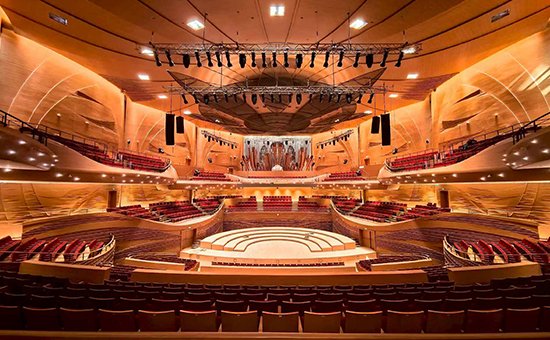
Auditoriums and lecture halls require excellent acoustic performance to ensure clear communication, comfortable listening, and an immersive experience for audiences.
Large spaces often contain hard surfaces such as concrete, glass, and wood, which can create excessive sound reflections and long reverberation times. Without proper acoustic treatment, even advanced sound systems may not deliver clear and balanced sound.
Choosing the right acoustic panels for an auditorium or lecture hall requires consideration of the room function, acoustic requirements, material performance, and installation design.
The first step is to understand how the space will be used.
An auditorium designed for performances may require a different acoustic approach compared with a lecture hall mainly used for speeches and presentations.
For example:
Auditoriums and theaters require a balance between sound absorption and sound reflection to support both speech and music.
Lecture halls focus more on speech clarity and reducing unwanted echoes.
A suitable acoustic solution should be designed according to the specific needs of the project.
Different acoustic panels provide different acoustic and aesthetic advantages.
Wood acoustic panels are widely used in high-end architectural projects because they combine acoustic performance with a natural appearance.
They are commonly applied in:
Grand theaters
Auditoriums
Conference halls
Cultural buildings
Micro-perforated wood panels and grooved wood panels can help control sound reflections while maintaining an elegant interior design.
Fabric acoustic panels are effective sound absorbers and are often used where high acoustic performance is required.
Typical applications include:
They are available in various colors and finishes, making them suitable for different interior concepts.
PET acoustic panels are becoming increasingly popular in modern architectural projects.
Their advantages include:
They are suitable for education buildings, offices, and multipurpose halls.
The location of acoustic panels is as important as the material itself.
Common installation areas include:
Wall-mounted acoustic panels help reduce excessive reflections and improve speech intelligibility.
In large halls, ceiling treatment can significantly improve acoustic comfort.
Common solutions include:
A combination of wall and ceiling acoustic treatment often provides better overall performance.
When selecting acoustic panels, project teams should consider important acoustic factors such as:
The Noise Reduction Coefficient (NRC) is commonly used to evaluate the sound absorption capability of acoustic materials.
However, the final acoustic result depends on the complete system, including panel thickness, installation method, and room design.
Successful auditorium and lecture hall projects require more than choosing individual acoustic products.
A professional acoustic solution provider can support projects through:
For architects, contractors, and developers, selecting the right acoustic partner helps ensure that the final space achieves both acoustic performance and architectural expectations.
Choosing the right acoustic panels for an auditorium or lecture hall requires a balance between acoustic performance, design requirements, and project conditions.
From wood acoustic panels and fabric absorbers to PET acoustic solutions and ceiling acoustic systems, different materials can be combined to create comfortable and functional spaces.
A well-designed auditorium acoustic treatment solution not only improves sound quality but also enhances the overall experience for every user.