Address
No.55-6, Denggang, Middle of Lishui Avenue, Lishui Town, Nanhai District, Foshan City, Guangdong Province, China.
Work Hours
Mon to Fri: 7:00AM - 18:00PM
Weekend: 10:00AM - 18:00PM

Address
No.55-6, Denggang, Middle of Lishui Avenue, Lishui Town, Nanhai District, Foshan City, Guangdong Province, China.
Work Hours
Mon to Fri: 7:00AM - 18:00PM
Weekend: 10:00AM - 18:00PM



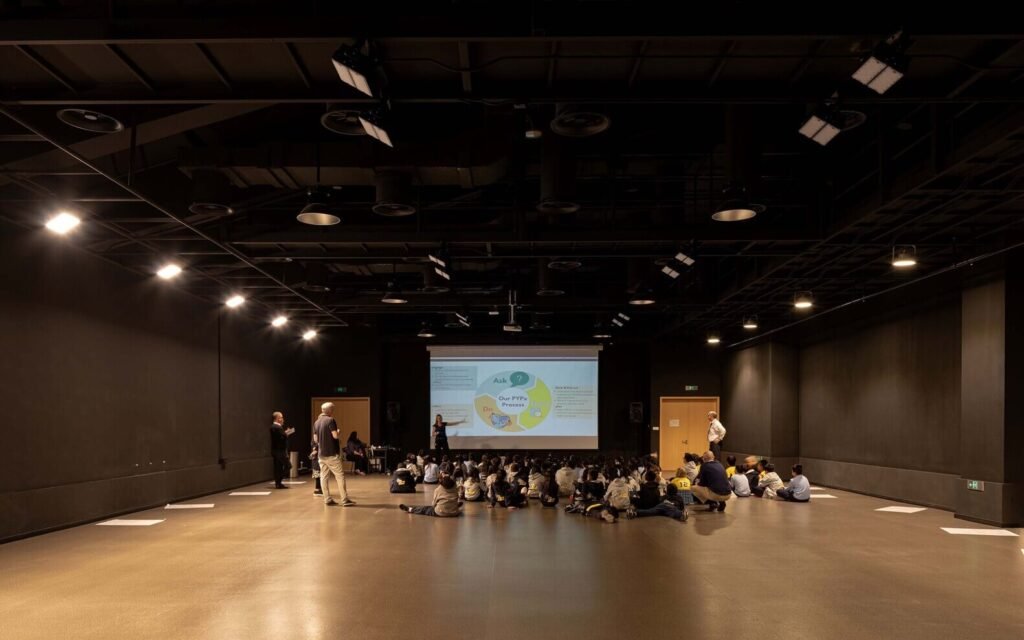
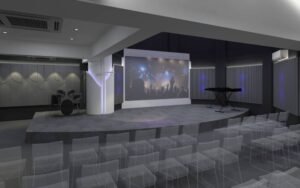
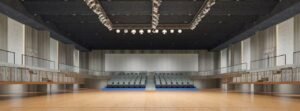
The project involves the construction of a new theater and lecture hall for Hangzhou His School. This multifunctional educational hall will integrate functions such as academic reports,lectures,small-scalecultural performances, and campus activities.
Solution Highlights
1.Addressing Acoustic Challenges in Halls: Employing a zoned acoustic treatment approach combining diffusion, absorption, and reflection, rather than solely relying on aorption or diffusion, to achieve acoustic balance between speech and performance environments.
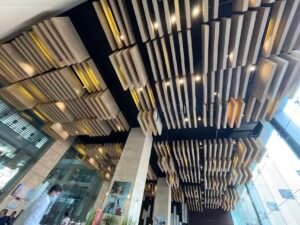
2.Function and Aesthetic Integration:Acoustic materials are integrated with the interior’s wood-based style. Customized finishes on the MLS diffusers and upholstered acoustic panels are highlights of the space design.

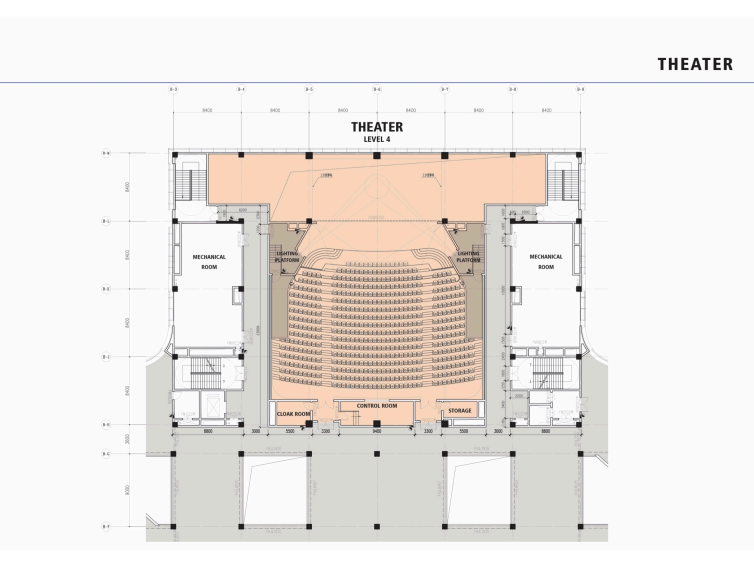
Spatial structural features: The theater features a fan-shaped seating area with a proscenium stage. While this layout offers excellent visual immersion, the symmetrical structure presents significant challenges in terms of acoustic design.
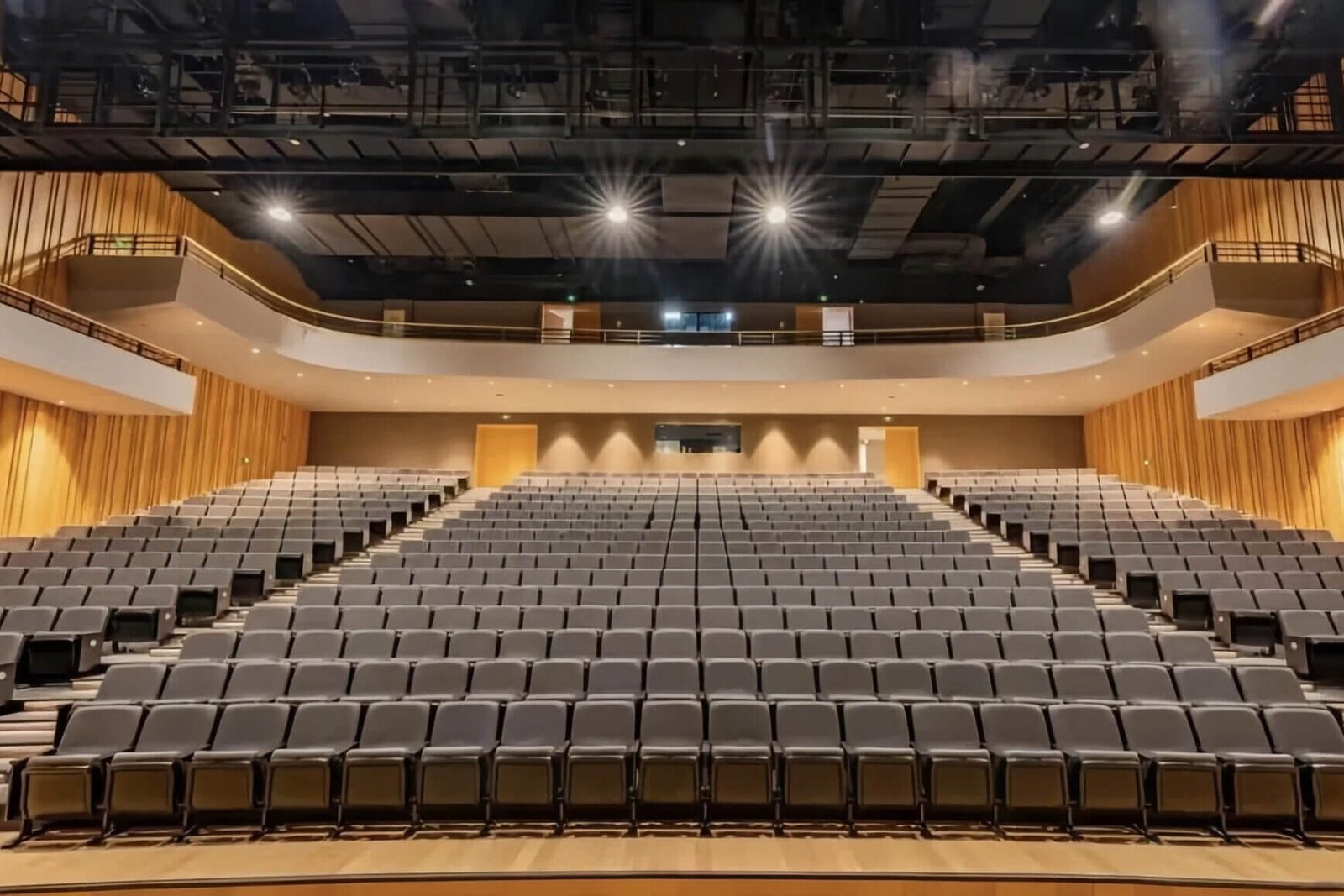
Sidewalls: MLS Acoustic Diffusers —— Eliminate parallel reflection defects and reshape a uniform sound field
The side walls utilize wooden MLS (Maximum Length Sequence) diffusers, employing a staggered grid structure to evenly scatter incident sound waves in multiple directions. This breaks the mirror reflection path of parallel walls, avoiding flutter echoes, while retaining an appropriate amount of sound energy, perfectly balancing speech intelligibility and musical richness.
Rear Wall: Fabric acoustic panel —— controls reverberation and echo
The back wall is made of fabric acoustic panels, filled with high-density sound-absorbing cotton, which belongs to the full frequency porous sound-absorbing material. It can efficiently absorb mid to low frequency reflected sound, eliminate wall echoes, and control the overall reverberation time within the target range, perfectly adapting to the clarity requirements of language scenes。
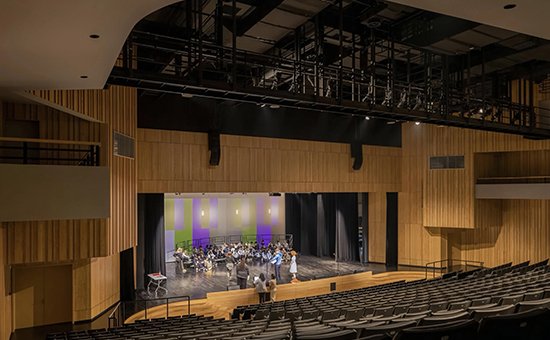
Stage Front Wall —— High-density wood reflective panel – enhances direct sound and early reflections
The stage sound source is directionally reflected to the front rows of the audience. By supplementing the direct sound energy and constructing early reflected sound, the problem of insufficient sound coverage in the front rows is effectively solved, significantly improving clarity and spatial intimacy.
Acoustic defects are completely eliminated: effectively suppressing echoes, flutter echoes, and sound focusing, resulting in pure and natural sound quality.
Reverberation time (RT60): Approximately 1.0s in the 500-1000Hz frequency band.
Overall sound field uniformity: Sound pressure level fluctuation in the audience area ≤5dB
Speech transmission intelligibility: STI intelligibility index ≥ 0.6